Across Vermont, short-term rentals (STRs) are frequently singled out as a culprit to housing shortages. But when you look at the data, particularly in places like Stowe where trends are well documented, a different picture emerges. Housing markets in Vermont are showing signs of correction and stabilization—despite the number of STR listings.
In Stowe, Owner-Occupied Homes Are Up. Second Homes Are Down.
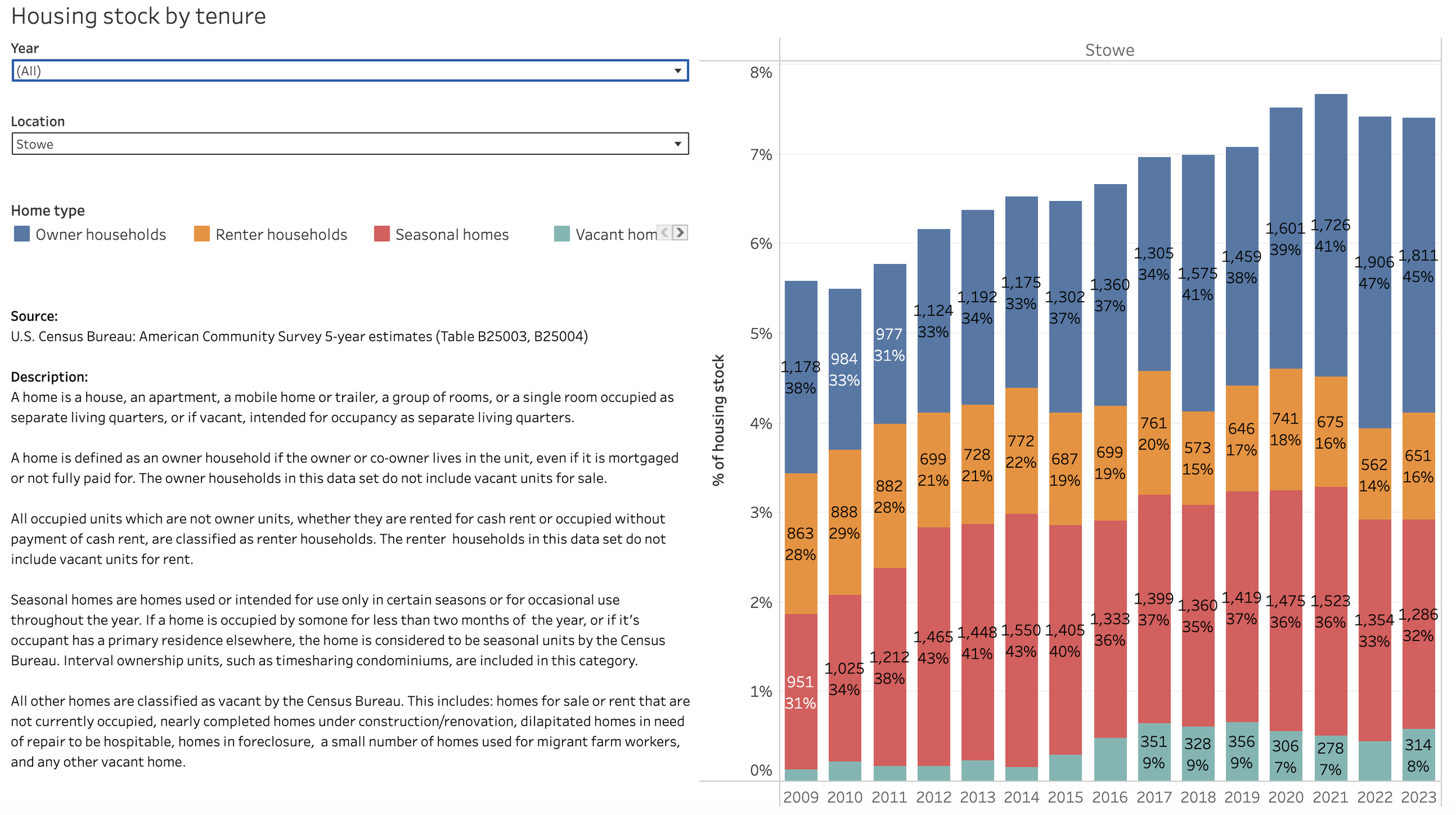
According to housing stock data published by the Vermont Housing Finance Agency (VHFA), Stowe’s number of owner-occupied homes is at its highest level since 2010, while second homes are at their lowest point over the same period.
This trend directly contradicts the claim that Stowe is being hollowed out by second-home ownership. Instead, it shows:
More full-time residents are living in Stowe year-round
Fewer homes are held exclusively for seasonal or occasional use
Source: www.housingdata.org
The data also indicates that the decline in long-term rental units coincides with an increase in owner-occupied units, suggesting that rentals are converting to permanent residences rather than short-term use.
Landlord Policies Pose Bigger Barriers to Rental Housing Supply Than STRs
Many Vermonters are reluctant to become landlords because the risks increasingly outweigh the rewards. Vermont’s tenant-first policies, including efforts to implement no-cause eviction restrictions, significantly limit owner flexibility and can leave housing providers carrying months of unpaid rent while still covering mortgages, taxes, utilities, and repairs. Combined with rising property taxes, insurance, and maintenance costs, long-term renting often no longer “pencils out” for small, local owners. Add in the growing stigma around being a “landlord,” and it is easy to see why many Vermonters choose not to provide long-term rental housing at all. These factors exist statewide. Restricting STRs does not address them; it distracts from solutions that would.
Key Market Indicators Point to Stabilization, Not Crisis
Additional data reinforces the conclusion that housing markets are stabilizing rather than collapsing. Local realtors consistently report a balanced housing market, with 5 or more months of inventory on the market. In real estate terms, that level of inventory signals equilibrium, neither a runaway seller’s market nor a distressed one.
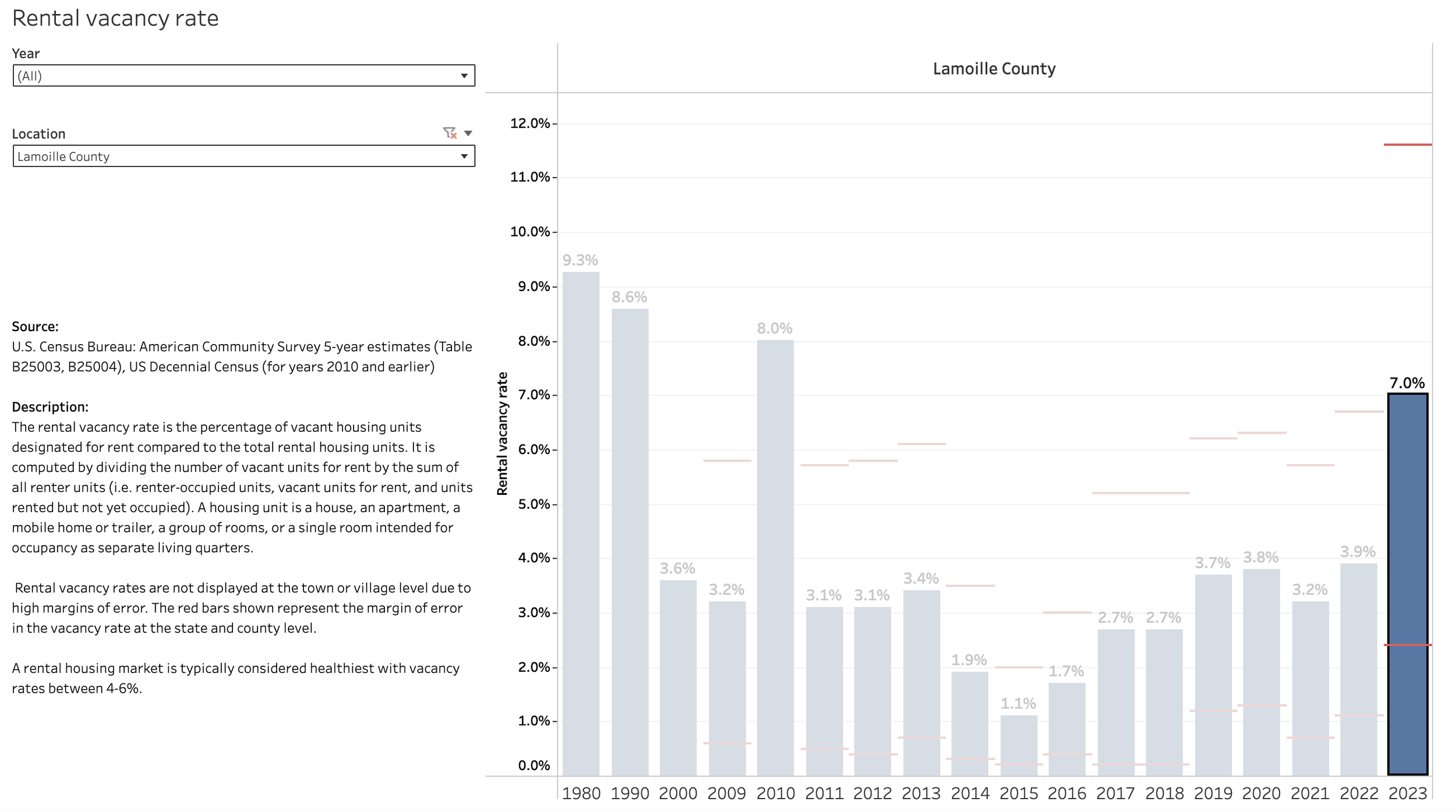
On the rental side, VHFA reports a 7% rental vacancy rate in Lamoille County. Housing experts have long held that a 5% vacancy rate indicates a "healthy” rental market. If short-term rentals were rapidly displacing long-term housing, we would expect to see plummeting vacancy rates. The data simply does not show that.
Source: www.housingdata.org
Ownership Data Further Undercut the “Investor Takeover” Claim
Another claim that does not hold up under scrutiny is the idea that large, out-of-state investors are a driving force. VTSTRA has examined Stowe’s STR registry data, which shows that owners with more than 3 STR units are overwhelmingly local residents. These are Vermonters operating small businesses, not absentee speculators extracting value and leaving. This ownership pattern matters because it reinforces the conclusion that the market is being shaped by local decisions and long-term residents, not by a surge of outside capital converting housing stock.
Economic Impacts of STR Should Not Be Ignored
Communities considering severe restrictions on STRs often overlook the economic contributions these rentals make. In other markets, STR data reviews show broad economic linkages. For example, studies of the impacts of short-term rental bans in tourist markets, such as New York City, found that restrictive policies reduced STR listings did not meaningfully improve housing supply or affordability, and instead pushed travelers into hotels and raised lodging prices.
If applied to Vermont towns, similar restrictions could:
Reduce local tourism spending
Shift dollars away from small local businesses to corporate hotels or external markets
Impact dozens of small property-management and hospitality enterprises that hire employees, often year-round
In Stowe, visitors staying in vacation rentals spend tens of millions of dollars annually at local businesses, including restaurants, shops, and services, generating tax revenue that supports municipal budgets. How would Stowe replace those lost funds? How would businesses stay open 7 days a week?
STRs Generate Public Revenue
Short-term rentals contribute significantly to public revenue streams. Statewide, STRs pay:
A 9% Meals and Rooms Tax
A 1% Local Option Tax in municipalities that have adopted it
A 3% statewide Surcharge Tax was enacted in 2024, which alone generated $9.3 million in its first year, part of the estimated $50 million in total STR-related tax revenue that the State collected in 2025.
For a tourism-oriented town like Stowe, that revenue supports local infrastructure and services without increasing tax burdens on residents.
What’s Driving Decisions? Data or Discrimination?
Stowe is not the only Vermont community debating how to balance housing, tourism, and economic vitality. Across Vermont, ski towns and rural destinations face similar pressures. But before rolling out restrictive STR policies, towns should ask:
What does actual housing data show?
Are we targeting properties that affect housing availability, or properties that were never part of the long-term rental housing stock in the first place?
What economic impacts would a regulatory change really have on jobs and local businesses?
Are we responding to data, or to a couple of loud voices?
What happens if we get this wrong?
A Cautionary Tale for Vermont Towns
Stowe offers an important lesson for every Vermont community: when the data shows stabilization, policymakers should proceed with care, not haste.
Markets do correct themselves. Housing dynamics change as people move, buy, sell, and settle. When policy fails to recognize those signals, it risks causing real harm, not only to property owners but also to workers, businesses, and local economies.